Showing posts with label disabled people. Show all posts

Thursday, 22 March 2012

Disabled missed out

This letter appears in today's Leicester Mercury:
Disabled missed out
Now that all the excitement of the royal visit is but a happy memory to many, I would like to say I experienced my own disappointment about the lack of access to the cathedral.
Though I was invited by the Bishop and the Dean of Leicester to represent my congregation at the multi-faith service and celebration of the Diamond Jubilee, I was unable to attend, due to my having walking disabilities, and access to get to the venue, without immense difficulty, was not available.
Car parking near enough was not allowed and dropping off was also forbidden in "the immediate environs of the cathedral".
Nor could I take a carer in with me to push me in my wheelchair if I parked further away at the multi-storey car park.
Even the arrangements for refreshments afterwards were held at an upstairs venue.
Due notice of this was given in a letter to me.
There may no doubt have been very valid reasons, but it does not reflect well on our city when equality of opportunity for all was not properly considered and planned for.
The same applies to the many city streets which are now totally pedestrianised and more are planned in the future.
At one time, disabled drivers could drive and park in Market Street at restricted times and this facility was highly appreciated. Can we have this back, please, or do we have to go out of town for our shopping?
Name and address supplied

Wednesday, 14 December 2011

Disabled face a city of obstacles

This article is published in today's Leicester Mercury:
Disabled Face a City of Obstacles 
A campaigner has drawn up a list of challenges facing disabled people trying to get around the city. 
Paul Southwood, disability officer for Leicester and District Trade Union Congress, visited busy parts of the city centre on his mobility scooter, identifying "the good, the bad and the ugly" for access. 
His report has been sent to mayor Sir Peter Soulsby. 
Mr Southwood has Guillian Barré syndrome, a disease of the nervous system which causes weakness and paralysis in the limbs. 
His report said an increase in street furniture from outdoor cafes, smoking areas and advertising boards had created obstacles for the less mobile. 
Mr Southwood said Market Street and streets near Leicester market were the worst. 
He said: "It's nice to be able to sit outside in the summer but it's about getting a balance. 
"The advertising boards are getting worse and in St Martin's the pavement, which is already small, is getting smaller because of them. 
"When you are on a scooter, it can be like going round the chicanes at Donington Park. It just needs common sense to see how that could create problems for some people. 
"There needs to be a limit on the obstacles." 
The report said the railway station was also difficult to negotiate for people with disabilities and the major redevelopment work being carried out had exacerbated the problem. 
Mr Southwood said: "Instead of doing the work in phases, they have chosen to do it all at once, which has meant quite a narrow corridor to get to the cash machine and the area has been boxed in. 
"At one point, the only way for everybody to get to the ticket hall was a narrow ramp with no handrails." 
A Network Rail spokeswoman said: "As a result of passenger comments, we have made improved, secure arrangements to give disabled users access to the station into the ticket hall from the long-stay car park via the storage lift. 
"While not specifically designed to improve disabled access, this should improve the station for all users." 
The bus stops at Leicester General and Glenfield hospitals were also criticised. 
Mr Southwood said the stops needed raised kerbs and the shelters should be upgraded.
He said: "Proper bus shelters – the same as in the city centre – are needed at all hospitals." 
Ruth Ward, travel manager for Leicester's hospitals, said: "We continuously review our travel and access plans and we will certainly bear these helpful suggestions in mind." 
Deputy city mayor Rory Palmer said: "I welcome this report. 
"We take these issues very seriously and we are always looking at how we can improve disabled access in the city."

Tuesday, 13 December 2011

Treatment of disabled gives cause to worry

The following letter is published in today's Leicester Mercury:
Treatment of disabled gives cause to worry
I read with great interest that East Midlands Ambulance Service has missed out on a £130m contract to provide non-emergency patient transport services in the region. 
I must say it came as no surprise taking into account the regular complaints of lateness often mentioned in this paper. What did come as a surprise was to find that Arriva Passenger Services Ltd (yes that is Arriva buses) won the contract for this area. As a disabled wheelchair user I find that worrying. Arriva buses are a complete nightmare to use with a wheelchair. I have been told by one driver "sorry you cannot use the ramp we do not get trained on it." Another stated: "You can't get on, the ramp is faulty." Some of the drivers could not be more helpful but some see us as a hindrance.
If this is the treatment of disabled people on their public transport what assurance – other than at the moment the present EMAS staff will be absorbed in the transfer – have we the treatment be any better under Arriva's management?
Andy Murtha , Enderby.

Friday, 2 December 2011

Thousands of disabled people in Leicestershire may lose blue badge

From today's Leicester Mercury:
Thousands of disabled people in Leicestershire may lose blue badge 
Thousands of people across Leicestershire could lose their blue disabled parking badges next year under tough new assessments. 
Nearly 50,000 people in the city and county have a parking permit, which entitles the holder or their carer to a disabled parking space. 
But from next year – under new Government guidelines – occupational therapists employed by the city and county councils will take over the assessments from GPs. 
The present system is believed to be inconsistent and it is estimated that up to 5,000 of the badge-holders risk losing their permits when they next try to renew them through the councils. 
Tony Donovan, chief executive of Leicestershire Age UK, said: "This is a worrying development. GPs know the health of their patients better than anyone, and this new assessment will just add another layer of bureaucracy and cost. Genuinely disabled people could lose out." 
But assistant city mayor for adult services Mohammed Dawood said: "People who truly need their blue badges have nothing to worry about. 
"We will make sure that the new system is as fair as possible. However, the new, more rigorous assessments will mean some people will lose their badges. It's unfortunate, but these are Government guidelines." 
In the city and county, 22,000 badge-holders automatically qualify because they are either blind, receive the higher rate of the mobility component of the disability living allowance, or they receive a war pensioner's mobility supplement. These people will be unaffected. 
However, about 26,000 are currently assessed by their doctor. Based on trials using occupational therapists elsewhere in the country, it is believed a fifth could lose out.
They have all been judged by their doctor to have a substantial permanent disability, which means they cannot walk, or find it difficult to walk. 
However, if a council assessment does not support this when they try to renew their badge, they risk losing it. 
Dr Angela Lennox, a GP in St Matthew's, Leicester, backed the move, saying: "This is an area which is ripe for reform. 
"It's very difficult to refuse a patient who you've known for many years if they're right on the borderline. I think it's right the assessment is carried out by someone independent." 
However, badge-holder John Carter, 50, of Leicester city centre, said: "GPs are the ones who have in-depth health records on each patient. Surely they're the best people to decide whether someone is well enough to walk?" 
A 65 year old badge holder, of Loughborough, who did not want to be named, said: "There's a lot of abuse, and a lot of people who don't need them, but I'm worried genuine badge-holders could lose out, too." 
City disability rights campaigner Andy Morris, 55, said: "I'm completely against this. I'd trust a doctor over a council official." 
The price of a badge is also due to rise from £2 to £10. The badges last for up to three years and will be redesigned from next year to make them more difficult to forge.

Monday, 24 October 2011

Disabled passenger rails at "joke" access to station

From today's Leicester Mercury:
Disabled passenger rails at "joke" access to station 
A disabled man has hit out at railway bosses after he had to push his wheelchair backwards along a dark, uneven road to gain access to Leicester train station. 
David Gordon arrived at the station early one morning to find parking spaces at the front had been barricaded off because of renovation works. He was asked to use the car park at the rear instead. 
But the 43-year-old marketing manager then had to get back to the station entrance along a route that would cause no problems for someone who is able-bodied, but which proved treacherous for him. 
"It was absolutely horrendous and a complete joke," he said. "It shows a complete lack of understanding for anyone who has issues getting around." 
First, Mr Gordon had to ask a passer-by to help him up the "slippy and impossible" disability ramp out of the car park. 
The ramp exits into Station Street, which does not have dropped kerbs, so he could not get on to the pavement. 
"The road was so uneven I had to push myself backwards because I was scared I would topple forward," said Mr Gordon. "I had to keep pulling in to the side of the road to avoid being hit by cars. 
"At 6am, in the middle of a road with no proper lighting, going backwards, is hardly what I would call proper disabled access." 
Mr Gordon, who mostly works from home in Blaby but catches a train to London once a week for meetings, complained to staff and was told he could arrange to use a goods lift which opens on to the car park when he needed to travel. 
"It's better, but the lift is scruffy and dusty – hardly what you would call ideal, he said. "Also, I have to book it 24 hours ahead and inform staff of the exact time I will be there. That's not convenient, given that anybody else can just stroll to the platform when they wish. 
"I've suggested they give disabled customers a radar key for the lift, but I'm yet to get a response." 
Mr Gordon said he was concerned about other disabled passengers who would have to get from the rear car park to the front of the station. 
"My main worry isn't me," he said. "It's the elderly lady who has to push her husband up the ramp, or the disabled person who might not have the confidence to complain." 
Network Rail, which runs the station, said it apologised for the inconvenience. 
A spokeswoman said: "We understand fully that this is not perfect. However, at present, this is the best they can do at the station. If the passenger has asked that we provide him with his own key to the lift, it is something we will look into but I do not know how feasible it will be. 
"As for the uneven surface of the road the passenger had to use, while it is the designated access, we are not responsible for the kerbs or the road surface." 
A spokeswoman for East Midlands Trains, which operates rail services from the station, said it was taking Mr Gordon's complaint very seriously and was working on changes that would make life easier for disabled passengers while the renovations were carried out.

Tuesday, 2 August 2011

Charities fight for survival as funding slashed across country

From today's edition of The Guardian:
Charities fight for survival as funding slashed across country
Anti-cuts campaign False Economy obtained data from 265 freedom-of-information responses from local councils
By Randeep Ramesh, Social Affairs Editor
More than 2,000 charities are being forced to close services and sack staff as local authorities slash their funding, or in some cases completely withdraw it, according to research published on Tuesday.
The study – based on 265 freedom-of-information responses from local councils across England and obtained by the union-backed anti-cuts campaign False Economy – reveals the scale of the impact that cuts are having on the charitable sector. Birmingham city council has cut funding to the largest number of charities, with more than 190 organisations losing out, followed by the cross-council organisation London Councils, which has cut funding to 174 groups.
Many charities will see their funding cut by half while others will lose entire budgets. The hardest hit include children's and young-people charities, with more than 380 organisations hit. Another 150 disability, 142 elderly and more than 110 adult care charities are also affected.
The research immediately raised questions about the role of charities as a cornerstone of the government's 'big society'. Brendan Barber, the general secretary of the TUC which sponsors False Economy, said: "The big society is looking more and more like a big con … These deep cuts to voluntary groups across the UK show that government claims that charities can replace direct services currently provided by central or local government are false."
False Economy says its survey shows more than £110m this year will disappear from charities' bottom line although this analysis, the first attempt to map the extent of the cuts in England, does not include major cities such as Leeds and Manchester as well as some large shire counties such as Hampshire or Tory flagship boroughs like Westminster. These councils refused to hand over data on the grounds it would take too long to extract the information.
The final figure is also likely to be far higher given that some large authorities have not yet finalised where the cuts will hit, and only charities or voluntary groups receiving a funding cut of at least 5% are listed in the research. The calculation includes cuts to charity's grants and where they occur some increases to budgets.
Acevo, the Association of Chief Executives of Voluntary Organisations, which represents 2,000 charity leaders in Britain, has warned previously that the sector could lose £750m this year alone if "central and local government passed on cuts proportionately". Another £250m would be lost because of VAT increases and reductions in tax breaks.
Peter Kyle, deputy director of Acevo, said that if ministers' pledges of extra funding, outlined in last month's public services white paper, were to materialise then there would be another £2bn for charities – enough to fill the gap left by the estimated £1bn shaved from their local government grants. "But charities are instead going to the wall because of the cuts and you cannot magic them back into existence again. It's short-sighted and mindless."
Experts also questioned whether the charitable sector could cover for the sharp drop in funding for local government. Tony Travers of the London School of Economics pointed out that local authorities last year had to bear more than £4bn in cuts – amounting to an 8% drop in real terms: "Ministers have created a much bigger challenge in hoping to expand the voluntary and NGO sector in the name of the big society with the size of such cuts."
The government blamed councils for "being short sighted in their approach [and] failing to recognise the importance of the sector". A spokesperson for the Department for Communities & Local Government said: "In their approach to budget setting, the best councils are showing that they understand that a strong, thriving voluntary is more important now than ever and could be the key to providing high quality, good value services to their residents. But this is not the case everywhere."
Sir Merrick Cockell, chairman of the Local Government Association, defended its decisions to cut budgets in a time of austerity. "The severity of cuts to council budgets means savings are having to be made across the board, and unfortunately funding to charities, voluntary organisations and community groups is not exempt."
Decisions to reduce financial support to the voluntary sector will never be taken lightly and local authorities have rightly carried out full and frank consultations before reducing funding to groups."

Sunday, 24 July 2011

Welfare to Work policy 'casts the disabled as cheats'

From today's Observer:
Welfare to Work policy 'casts the disabled as cheats'
Flagship initiative threatens safety of the disabled by suggesting that they are scroungers, say charities
By Daniel Boffey
The government's flagship Welfare to Work policy is inciting hatred and violence towards the disabled by portraying them as cheats and benefits scroungers, an alliance of charities has warned.
A drip-feed of statistics about claimants who have been denied benefits by the Department for Work and Pensions because they are deemed fit to work threatens the safety and quality of life of its members, says an alliance of 50 charities. The government is feeding a negative attitude towards people with disabilities, which, the charities warn, will ultimately end in violence.

Read the whole article along with reader comments (and the chance to leave your own) on the Guardian / News / Society / Disability website.

Saturday, 18 June 2011

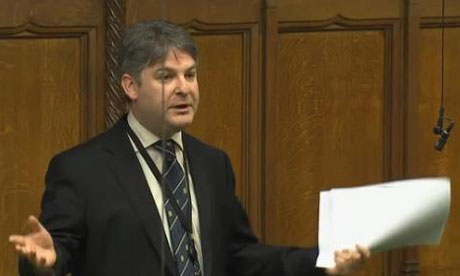
Tory MP Philip Davies: disabled people could work for less pay

From today's Guardian, reported by Allegra Stratton, Political Corresppondent:


Tory MP Philip Davies: disabled people could work for less pay
Shipley MP describes criticism of his remarks that disabled people could work for less than minimum wage as 'leftwing hysteria'
A Tory MP has sparked anger by suggesting that disabled people should work for less than the minimum wage to increase their chances of being taken on by employers.
Philip Davies told the Commons: "If an employer is looking at two candidates, one who has got disabilities and one who hasn't, and they have got to pay them both the same rate, I invite you to guess which one the employer is more likely to take on.

Read the full article, along with reader comments (and the chance to leave your own) on the Guardian website: http://www.guardian.co.uk/society/2011/jun/17/tory-philip-davies-disabled-people-work

Friday, 4 March 2011

Disabled face a threat to their independence

This is the First Person column in today's Leicester Mercury:
Disabled face a threat to their independence 
Shelley Bark has grave concerns over proposed changes to a vital source of financial help 
The Independent Living Fund (ILF) was created in 1990 for disabled people aged 16 to 64 who needed help with their care. This allowed them to employ someone to help them with their everyday personal care needs. The ILF is a Government-funded organisation which has helped 46,000 severely disabled people in its lifetime. Currently ILF helps 20,000 severely disabled people in the UK and employs 160 staff and 90 self-employed assessors. 
In 2009 the Government did a consultation with ILF and its users to see if the users were happy with the service and how they could improve it. Now all of a sudden this Government wants to end this wonderful scheme, firstly by stopping new disabled people joining it; then ending the whole ILF scheme in 2015. Thereafter the money will transfer to local authorities (what we don't know is if it will be ring-fenced). This will mean the 20,000 disabled people will have to be accessed again by a local authority social worker for direct payments which means extra costs and we, the users, might not receive the right levels of funding for the right level of care, especially those severely disabled people on high care packages allowing them full independence to live a productive life – a human right. 
I have severe cerebral palsy which means the only things I can do is drive my electric wheelchair and work my computer my with eyes which allows me to write this article. I am an intelligent lady and I can run my own care package, which entails hiring and firing my own carers, doing my tax and National Insurance, carers' contracts and rotas and making sure that I have got the right type of care for my needs. At the moment I have got four members of staff who pay tax and National Insurance and also I pay the employer's National Insurance which means I'm putting money back into the Government. Having carers in my own home means I can lead a normal life. 
Direct payments can be used for care only, but ILF gives us the freedom to pursue different avenues in life, and can be used for additional expenses that go with having 24-hour care and having carers in the home, for example, electricity, tea- and coffee-making facilities, wear and tear. 
I have always led a full life and have represented my country in sport, having been both a world and European champion. I have also been very active in championing causes for the disabled, none of which would have been possible without ILF. Without this level of care, which I don't think local authorities can provide for us, how many vulnerable people will end up in care homes having their quality of life and dignity taken away from them? And where are the people who would be applying for this help now going to go?

Shelley Bark lives in Syston and wants to make people aware and help other disabled people keep their independence and their dignity.

Wednesday, 2 March 2011

Real hassle on the buses

This letter is published in today's Leicester Mercury:
Real hassle on the buses
I have read the story "Bus drivers humiliated me, says disabled man" (Mercury, February 19).
I received a questionnaire this week from Vista, the blind and partially-sighted people's organisation, asking if they could try to make things better with things like buses, airports, shops and banks, where people have difficulties.
I have emphasised buses, as some of the drivers, not all, are ignorant.
Getting on and off buses when you are disabled is a problem. I am partially sighted. I walk with a stick because I have walking difficulties as well and also carry a shopping bag.
When you ask the drivers to let the bus down, they just ignore you or look at you as if you are not there.
I always emphasise the words "please" and "thank you" when I ask someone to do something for me. I always taught my children good manners cost nothing but it falls on deaf ears with some drivers.
On Narborough Road where the big car showroom is, some of the buses come from the slip road at the side of the motorway. They don't even bother to pull in at the bus stop kerb. They stop in the middle of the road and don't bother to let the bus down. I have very often had to let the bus go and wait for the one that comes round the corner of Braunstone Lane as they do stop and pull into the kerb.
Now I get a taxi if I'm going into town. It's less hassle but more money as I have a free bus pass.
Maybe some more disabled people could write in and perhaps Arriva could sort these ignorant bus drivers out; and it's not just disabled people – it's mums with prams. I've heard drivers shouting at them because the prams are in the way.
Buses are supposed to be a service for the people of Leicester not just a job for a driver. What's happened to courtesy these days? I'll answer that myself. Gone down the drain with "please" and "thank you".
Lorna K Crane, Braunstone South

Thursday, 18 November 2010

Bad attitude to disability?

This letter is published in today's Leicester Mercury:
Bad attitude to disability?
My good lady friend is somewhat disabled; due to a heart condition and to arthritis she cannot walk in comfort, and the distance she can cover before she has to stop is approximately 50 yards.
Clearly a visit to the shops – one of her great pleasures – is impossible without some form of assistance.
When she first became ill we tried a conventional wheelchair with me as the power source. Be it recorded that I never stopped in the right place or at the right distance for her to examine whatever she wanted to examine. We therefore resorted to an electric disability scooter.
It would seem, judging by your columns, that these devices are not popular with a certain section of the community. In fact, it has suggested that only qualified persons with driving certificates, insurance and tax should be allowed to drive these vehicles.I would like to know more about these objectors. I have a vision (all too common in reality, I am afraid) of able-bodied persons, Walkman or mobile telephone glued to their ears, gazing at friends and/or shop windows and expecting everybody to get out of their way. Worse, I imagine these people riding bicycles, especially in areas where it is illegal.
Disillusion me please; why should the disabled and elderly be house-bound so that you can walk about at your pleasure? Why are you not condemning bicycle riders, especially children, some of whom have no thought for anyone, as well?
Could it be that the sight of disability disturbs you? If so, what are your thoughts on those who are fighting and being wounded on your behalf abroad?
Dr D A C McNeil, Birstall

Wednesday, 22 September 2010

Benefits outweigh drawbacks

This letter is published in today's Leicester Mercury:

Benefits outweigh drawbacks
I am a disabled student at the University of Leicester and have just finished my first year.
As I am at the University of Leicester, I have to go to the Freemen's Common Health Centre for my medical needs. As a wheelchair user, I have found the health centre to be very inaccessible, to say the least.
To start with, I could not use the front door to the practice as there were steps inside and had to go round the back. I had to ring a bell next to the door to get attention but the bell didn't work.
Finally, I was let in and waited for my appointment. I then found that the doors to the doctors' rooms were not wide enough to fit my wheelchair through. This meant that the doctor had to see me in the corridor! Thankfully, I did not have a personal issue at the time; if I do in the future, God help me!
The health centre also does not have disabled toilets, which does not help. I have also had to have vaccinations in the back of a taxi before as I could not get to the doctors' rooms.
I think you'll agree that this is not the most hygienic of environments. I can't wait until a new doctors' surgery is built and, quite frankly, it can't come soon enough.
I understand the planned health centre which may be built in Victoria Park has generated opposition. Apparently, the building would destroy areas of green space from its construction. I understand residents' concerns – I am an environmentalist myself. However, Victoria Park covers a large area and it is not the only park in the city.
Indeed, the developers say the building will make allowance for bats, for example. Assura, the developers of the planned health centre, say the building will be designed to achieve an "excellent'' BREEAM health care eco-rating.
This shows the building will be built so as to minimise its effect on the environment. The fact of the matter is a new health centre needs to be built.
If the quickest way to achieve this is to build on a relatively small area of Victoria Park, then I am all for this development. The health centre would provide healthcare for all students of the University of Leicester and members of the public as well. Yes, green space would need to be used; however, according to Assura, the building will be designed to minimise its impact on the environment.
Therefore I believe the benefits of the new health centre will far outweigh the drawbacks.
Alex Squire, Leicester

Friday, 25 June 2010

Most buses now disabled-friendly

This letter is published in today's Leicester Mercury:
Most buses now disabled-friendly
Regarding the letter from Val London ("Problems faced by the disabled", Mailbox, June 18) I have a few comments to make.
Bus operators have until 2017 to make all their fleets "disabled- friendly", not 2012, though most operators are well ahead of this deadline, Arriva Midlands among them.The only Arriva routes in our area still normally worked by "step entrance" buses are the X3 to Market Harborough, 80 (University Halls of Residence) and 152/153 (Leicester-Desford-Coalville/Market Bosworth).
Regarding service coaches, National Express are putting "disabled-friendly" coaches on many of their routes now, with more to come. The Disability Discrimination Act only covers vehicles used on scheduled services, so private hire and touring coaches are not covered by it.
I wish Val and people with disabilities well. I hope these details help.
Terry Kirby, Campaign for Better Transport (Leicestershire)

Friday, 18 June 2010

Problems faced by the disabled

This letter is published in today's Leicester Mercury:
Problems faced by the disabled
Well done Alex Squire (First Person, June 11) for highlighting some of the shortcomings that wheelchair users have to put up with.
There are many places in Leicester where they flout the Disability Discrimination Act, but there are some places where it cannot be enacted. For example, I bank at Lloyds and my branch was High Street. There is no wheelchair access, but they are not allowed to alter the building because it carries a preservation order.
Their branch in Horsefair Street is accessible and until recently it had a dedicated counter for the disabled which could be used without queuing. This so-called privilege has now been removed because it was being abused by other, more selfish, clients. It's obviously an easier option for the management to remove it rather than trying to enforce it and please the few.
If this happens every time a system is abused, then there will be no dedicated parking spaces and no toilets for the disabled.
Many is the time we have waited outside a locked toilet only to see a perfectly able person walk out.
I know you can't always tell a disabled person just by looking – but the "giveaway" is the sheepish grin and the mumbled apology.
I waged a campaign with public transport in Leicester for a few years and I am glad to say that things are considerably better now, thanks to a little retraining.
Some years ago we got on a bus at Leicester General Hospital and the driver said: "You'll have to fold that up." Had I been able to fold the wheelchair up there would have been no need for it! Mind you, there is still the odd Arriva bus that cannot be accessed.
Only last week there was an old type bus on the 51 route and we had to wait for the next one. They do have until 2012 to change them all though, I believe. Because I'm not sure what the situation is with coaches, we do not use them.
All credit to the staff of the train station here in Leicester, though – they are wonderful and can't do enough to help. It's a real pleasure to travel on a train – it's just the cost the prohibits the indulgence.
I am fortunate in as much as I have a manual wheelchair and my husband is good enough to push me around. If I were in the same position as Alex I should find many more places would be no-go areas.
I believe, as Alex does, that the Act should be more legally binding and the politicians who crafted it should be more interested in monitoring same – otherwise the law really is an ass.
Val London, Leicester.

Saturday, 13 March 2010

Leicestershire disability service faces axe

This article is published in today's Leicester Mercury:
Leicestershire disability service faces axe
A scheme which helps scores of adults with learning difficulties to find work and gain work experience could face the axe.
Leicestershire County Council is reviewing where its spends its money as it tries to save £770,000 from its £15.5m day services budget.
One option is to stop funding schemes which help disabled people find work unless private investment can be found.
Campaigners fear this could spell the end of projects such as Breaking Barriers, which was set up two years ago to supplement day care services for people with learning difficulties, mental health problems and physical disabilities.
It has nine schemes in Hinckley, Coalville, Wigston and Loughborough and helps scores of people.
The scheme at Millfield Day Centre, in Hinckley, runs a recycling project involving up to 25 people who run a weekly market stall selling old clothes andrecycling paper.In Wigston, there is a gardening and nursery project and Coalville's scheme runs catering training and organises work experience placements.
Sue Disley, the county's assistant director for adults and communities, said: "People love attending these employment projects, which help adults with learning disabilities become more independent, learn skills to find work and build their confidence.
"However, they cost £770,000 a year to run and the council is not required by law to provide them.
"The review will see if these social enterprises can generate more income themselves and look at ways of bringing in private investment.
"The aim is to find alternative sources of funding so the schemes can continue."One volunteer in Hinckley, who did not want to be named, said these projects should not be cut.
He said: "The scheme helps service users to earn money and be more independent."I can't believe they are now considering closing it.
"The council is uncaring and will be hitting the most vulnerable people in our society."They should have thought it through properly in the first place."
The council's cabinet approved the review at Monday's meeting as part of its "medium term financial strategy".
Coalville Labour district councillor John Legrys said: "These schemes are invaluable and without their help, many clients will be forced to turn to official day centre care services, which will cost more."
Conservative Coun David Sprason, cabinet member for adults and communities, said: "We have already invested over £2.5m in these schemes.
"Unfortunately, however, we have no choice but to make efficiency savings. This review will look at alternative and perhaps better ways to fund these services."

Tuesday, 9 February 2010

Leicester City isn't playing fair say disabled couple

From today's Leicester Mercury:
Leicester City isn't playing fair say disabled couple 
A couple say that Leicester City is forcing them out of their season ticket seats and segregating them in a disabled section away from their friends and family. 
Wigston couple Colin and Mary Holden have been told by the club they must give up the Walkers Stadium seats they have held for four years and sit elsewhere if they want to continue to qualify for concessions for disabled supporters. 
Mr Holden, 67, has angina, back condition spondylolysis and arthritis in his hips and knees. His wife, 66, has walked with a cane since she damaged the muscles and nerves in her back in a fall. 
Both are registered disabled but do not use a wheelchair so are able to sit among able-bodied fans.
In a letter to the couple, seen by the Leicester Mercury, the club says it is introducing designated areas manned by "specially trained safety stewards" to provide "better provision, support and assistance on match days".
As a result, they have been informed they must change their current seats in the JCC Lighting Spion Kop if they wish to continue to benefit from reduced prices. They will have to move into the East Stand, three sections away, and sit apart from the friends and family they currently sit near. 
Mr and Mrs Holden pay £140 for two season tickets but if they choose to remain in their current seats they say the season tickets will cost them upwards of £500. 
"To say we are disappointed is an understatement," said Mrs Holden. 
"We have sat in there for the past few seasons with no trouble and now they are telling us either we move or we pay a lot of money to stay where we are. 
"We feel that they are forcing our hand to do what they say. 
"We want to stay in the seats close to our friends and family, but the club is segregating us from them. 
"We have been loyal supporters for several years and they did not even ask our opinion. They just said this is what we have got to do or else." 
Mr Holden said: "We feel we are being victimised and it is wrong to treat disabled people this way. 
"We enjoy the football, but if they want to be like that then they will lose the support." 
Mr and Mrs Holden's daughter, Helen Hodgkinson, 31, and her husband David, 37, from Hamilton, Leicester, act as carers for the couple and qualify for free tickets as a result. 
Mrs Hodgkinson said: "I am absolutely disgusted. It is only last week that the club were talking about respect for the players and the referee, but we feel that we are being shown no respect."
Nobody from the club was available to comment. 
But according to the letter, the changes have been brought in to allow "health and safety officers to audit attendance and, in the event of an emergency situation within the stadium, pay greater attention to the needs of our disabled supporters".

Monday, 31 August 2009

Theme park asks Leicester teenager to prove disability

This article is published in today's Leicester Mercury:
Theme park asks Leicester teenager to prove disability
A teenage wheelchair-user was left angry and upset after staff at a theme park asked him to prove he was disabled.
Mohamad Hussain, 16, was challenged by staff at Alton Towers' guest care centre when he asked for a special wristband which would enable him to jump queues for the Staffordshire attraction's rides.
Mohamad has muscle-wasting Duchenne's muscular dystrophy.
He is unable to stand or perform tasks such as dressing or feeding himself.
His mum, Jamila, eventually managed to convince staff her son qualified for disabled access.But the teenager then discovered that the extent of his disability meant there were few attractions he could access anyway.
Mohamad, from Highfields, Leicester, said he "could not believe it" when staff challenged him to prove he was disabled.
He said: "It made me feel very bad. We were asking for wristbands which they give out to people with difficulties so they don't have to queue for a long time."
He added: "I went to Disney World not long ago and it was amazing. We were treated really well.
"I think some theme parks are behind the times when it comes to caring for the disabled."
Mum Jamila, 43, said: "I didn't know what to say when the young man asked me to prove that Mohamad was disabled. He was in a wheelchair in front of him.
"Maybe if Mohamad wasn't in a wheelchair then I could understand. But I don't usually carry a doctor's letter because no one has ever asked him to prove it before."
Jamila said that despite having the wristband, her son was unable to enjoy many of the attractions because access required more mobility than Mohamad was capable of.
She said: "After going to all the trouble of getting the wristbands we couldn't get on any of the rides anyway.
"They said there was disabled access to all the amusements but he wasn't able to go on a single ride.
"We spent the day walking around looking at the rides and shops and then went home.
"It's really disappointing and more should be done to accommodate people with disabilities, especially at big theme parks like Alton Towers."
A spokeswoman for Alton Towers said: "We offer various attractions, for example our sea life aquarium Sharkbait Reef, a variety of animals to meet and greet in Old McDonald's Farmyard and numerous shows, which means guests have other options than just rides.
"In terms of us requesting proof of disability, this is company policy and for auditing purposes.
"In some circumstances we do not require proof of disability, however we need evidence of why a wristband has been authorised."

Tuesday, 18 August 2009

Pair stage sit-in bus protest

This article is published in today's Leicester Mercury:
Pair stage sit-in bus protest
A disabled man and his carer staged a sit-in protest on a bus after they were told there was no room for them.
Stuart White and Roger Hartshorn, who is in a wheelchair, tried to get a ride home to Highfields, Leicester, on the No 17 bus from Yeoman Street in the city centre yesterday afternoon.
But a mother with a young baby in a buggy were taking up the space that can be used for wheelchairs or buggies.
Mr White, 65, was told that he and Mr Hartshorn, 79, could not be on the bus as well as the woman with the buggy. But Mr White refused to budge.
The stand-off lasted around 45 minutes, with the other passengers – including the woman with the buggy – getting off and taking other buses pulling up into Yeoman Street.
A First Bus supervisor arrived and Mr White and Mr Hartshorn were taken to Highfields on the bus with no other passengers on board.
Eyewitness Selina Eagle, 21, from the city's West End, said: "The driver was trying to kick the man in the wheelchair off. The passengers were getting angry because the driver refused to drive the bus."
A spokesman for First said: "The whole idea of having easy access to buses is for us to make them more usable for people in wheelchairs and for people with children in buggies as well. But there are occasions when we will have conflicts."

Wednesday, 13 May 2009

Hundreds sign up for disability ID scheme

This article is published in today's Nottingham Post:
Hundreds sign up for disability ID scheme
MORE than 1,000 people in Notts have signed up to a pioneering scheme allowing them to prove they have a disability.
The cards, which are being produced by the county council, help people who are not obviously disabled use services they are entitled to.
Since being launched last summer, 1,200 people have been given the photo-identity cards.
The authority, the first in the country to offer the scheme, is now planning to provide free cards to disabled children.
Youngsters will be able to choose from designs featuring a giraffe, a leaf or a dove if councillors give the go-ahead.
The scheme has now been recognised nationally after being shortlisted for two awards.
Paul McKay, director of adult social services for the county council, said its success had been "phenomenal".
He said: "It has given people more respect and dignity and improved their well-being.
"Not everyone has an obvious disability and this scheme gives people a lot more confidence."
The cards are designed to fit in a purse or wallet and include the holder's picture.In some cases, people with colostomy bags have been able to use the card to prove they are disabled when entering nightclubs.
As many as 40 people a week in Notts are now applying for the cards and the council has taken on a new part-time worker to deal with requests.
Arnold resident Terry Gallagher – who has had his bladder and large intestine removed but doesn't use a wheelchair or walking aid – came up with the idea.
He said: "The council deserves a tremendous amount of credit for doing this. I know a lady who suffers very badly from asthma who found a disabled seat on the bus and started using her inhaler.
"A group of young mums started calling her names for using the seat, but the poor woman was fighting to breathe and was so frightened she wouldn't go out.
"But she now has a disability card and is able to go out because she has the confidence. It is a wonderful scheme."
Michael Northridge, 69, of Hucknall, often needs to use the toilet at short notice after having an ileostomy.
He said: "When I saw this I thought it was a brilliant idea. I have already used it twice in emergencies.
"Once I had to visit a pub to use the toilet and I had the card already at hand. I felt very confident about it."
Leaflets and application forms for the cards are available at most libraries and all county contact points, where advisors can are on hand to help.
They are also available by phoning 08449 808080.